
Keto food
An overview of fat sources, protein sources and carbohydrate sources – and why precision matters so much in therapeutic ketogenic diet.
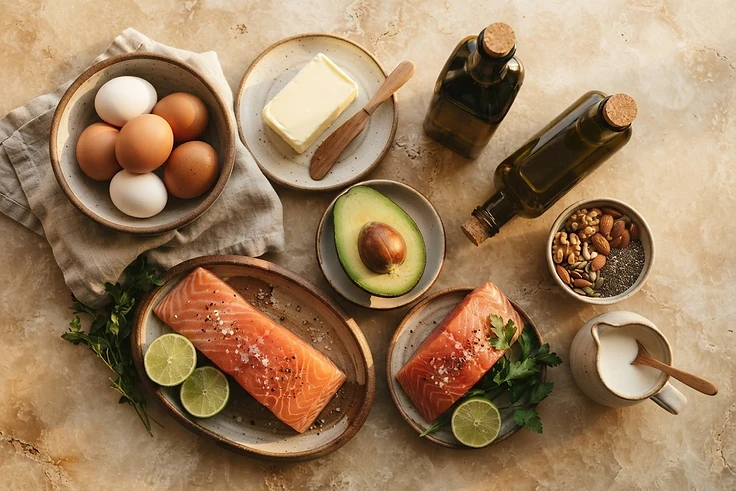
Fat sources
- Butter
- Olive oil
- MCT oil
- Cream
- Mayonnaise
- Avocado
- Fatty fish
- Nuts and seeds (where appropriate)
Protein sources
- Eggs
- Fish
- Meat
- Chicken
- Cheese
- Other protein sources adapted to individual diet
Carbohydrate sources
- Vegetables
- Dairy products
- Sauces
- Spices
- Ready-made products
Why limit carbohydrates?
In therapeutic ketogenic diet, the amount of carbohydrate often needs to be limited for the body to produce ketone bodies. Vegetables, dairy products, sauces, spices and ready-made products can also contribute carbohydrates. Ingredients must therefore be carefully assessed – and calculated against the individual plan.
Keto food is more than "low carb"
It's important to understand the difference between regular low-carb, commercial keto and therapeutic ketogenic diet.
Low-carb
Reduced amount of carbohydrates. Often flexible and without precise ratio calculation.
Keto
Popular diet for weight loss. Lower carbohydrate, higher fat – but rarely medically calculated.
Therapeutic ketogenic diet
Carefully calculated and individually tailored. Precise ratio, macros and calories – followed by healthcare professionals.
This is especially important for people with GLUT1 deficiency syndrome. Therapeutic ketogenic treatment can require much more precision than regular low-carb or a commercial keto diet.